
Last updated August 28, 2026
Free in-home measure and quote - PGT, CGI and CWS impact lines compared on your actual openings, style by style
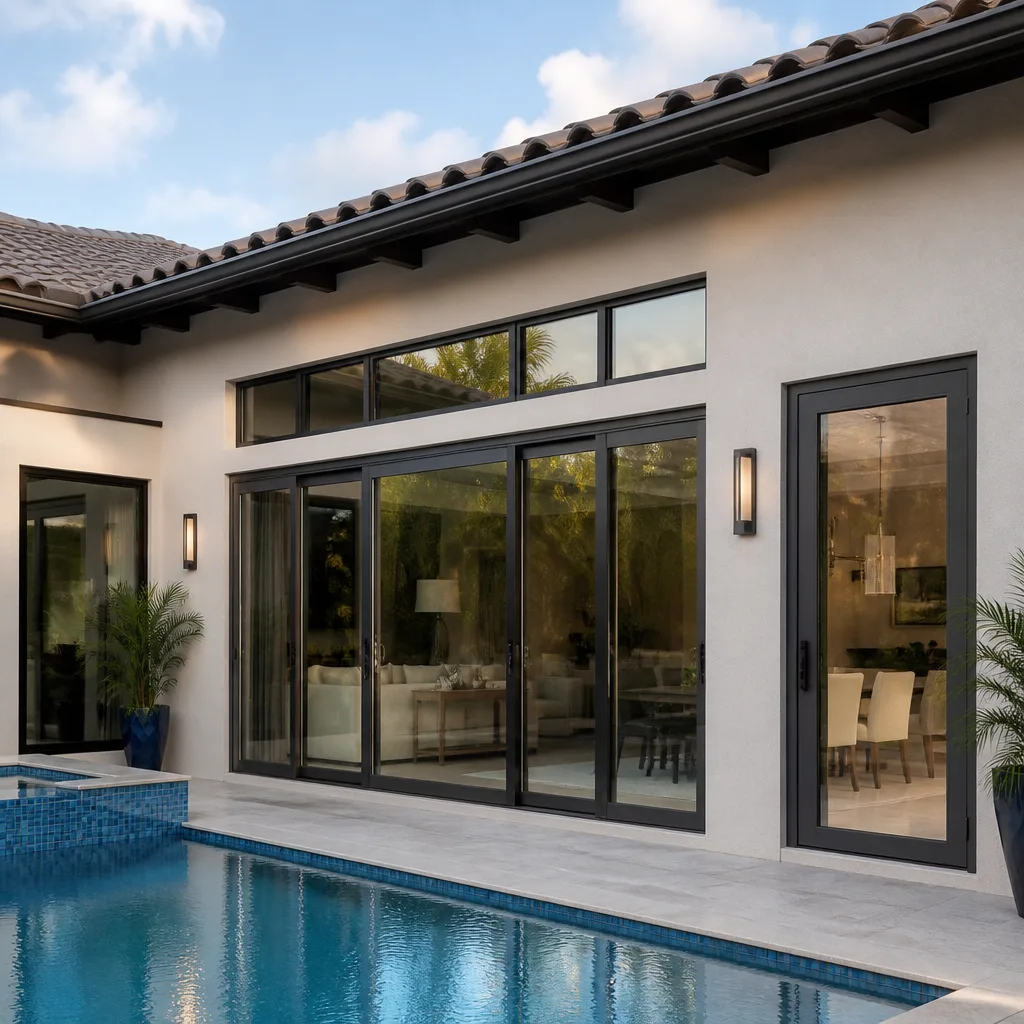

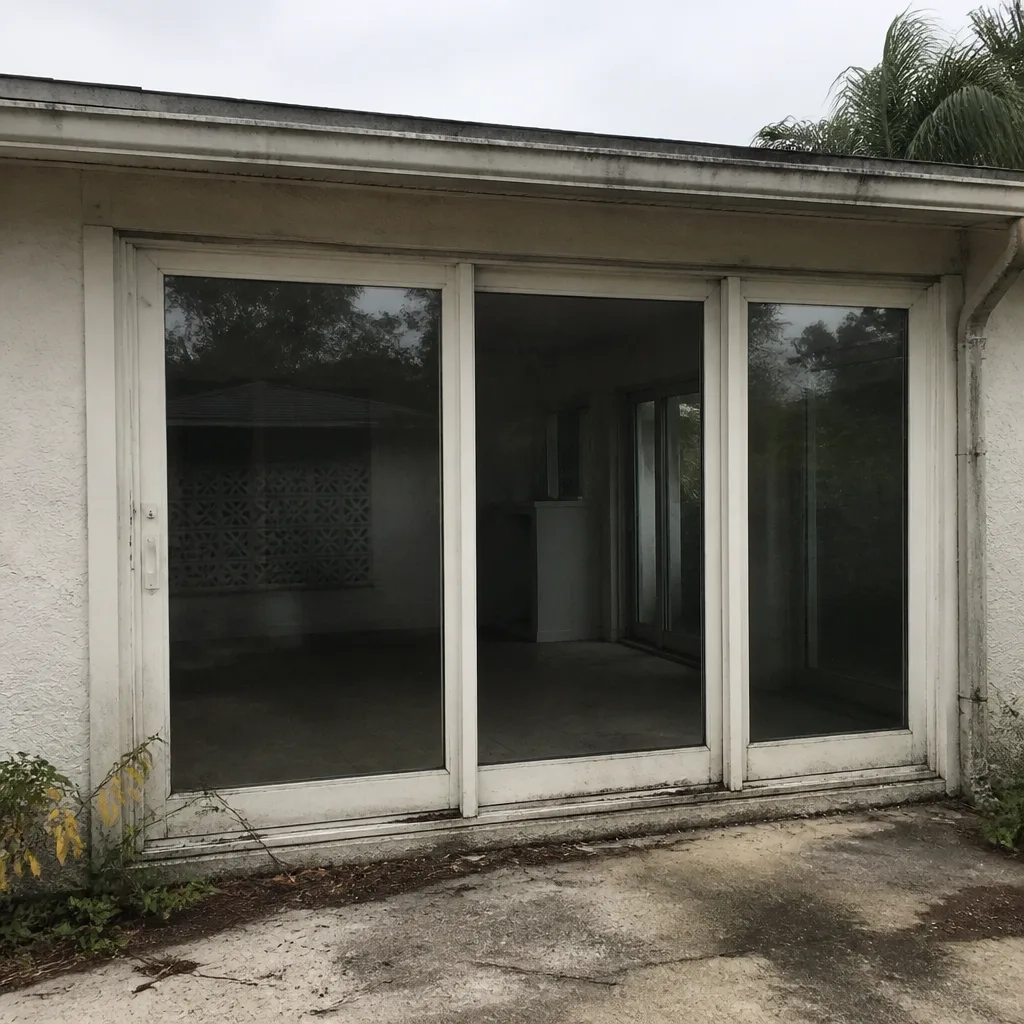 Before
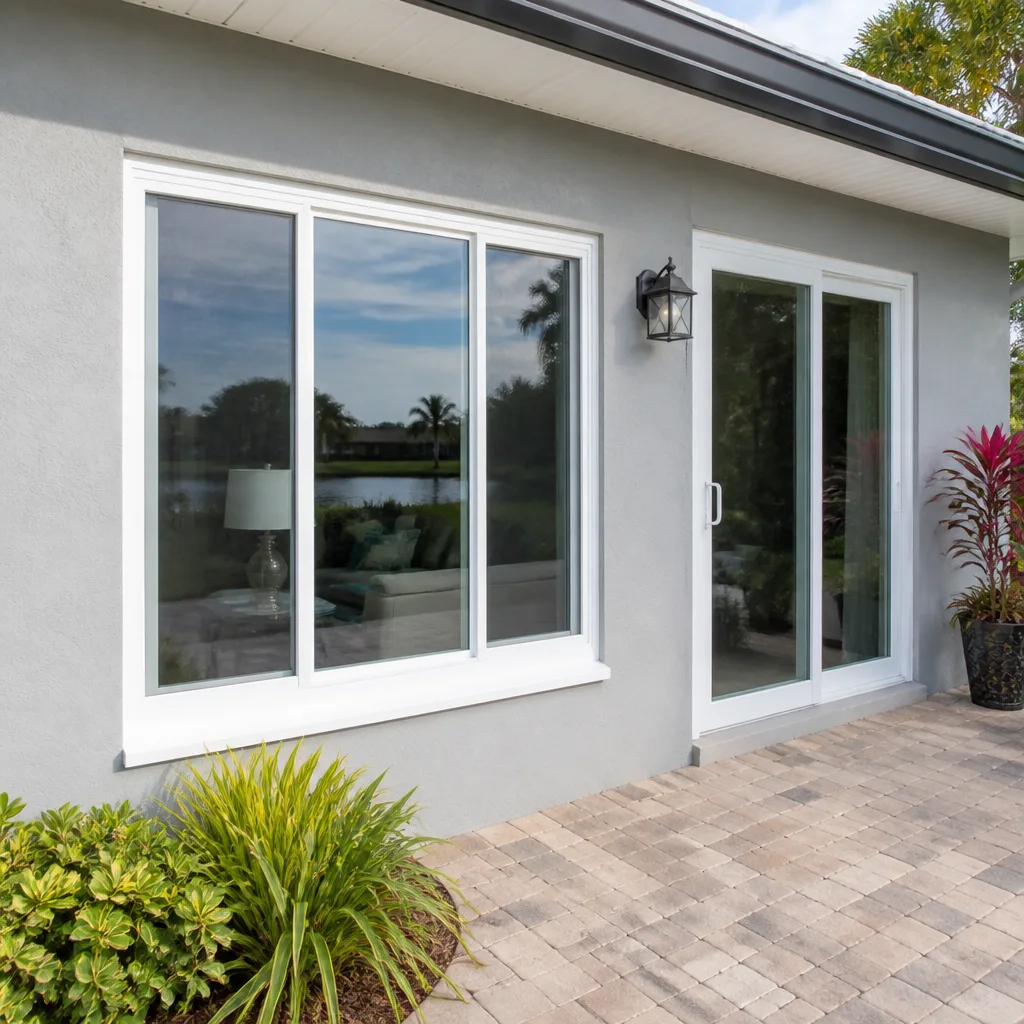 After
After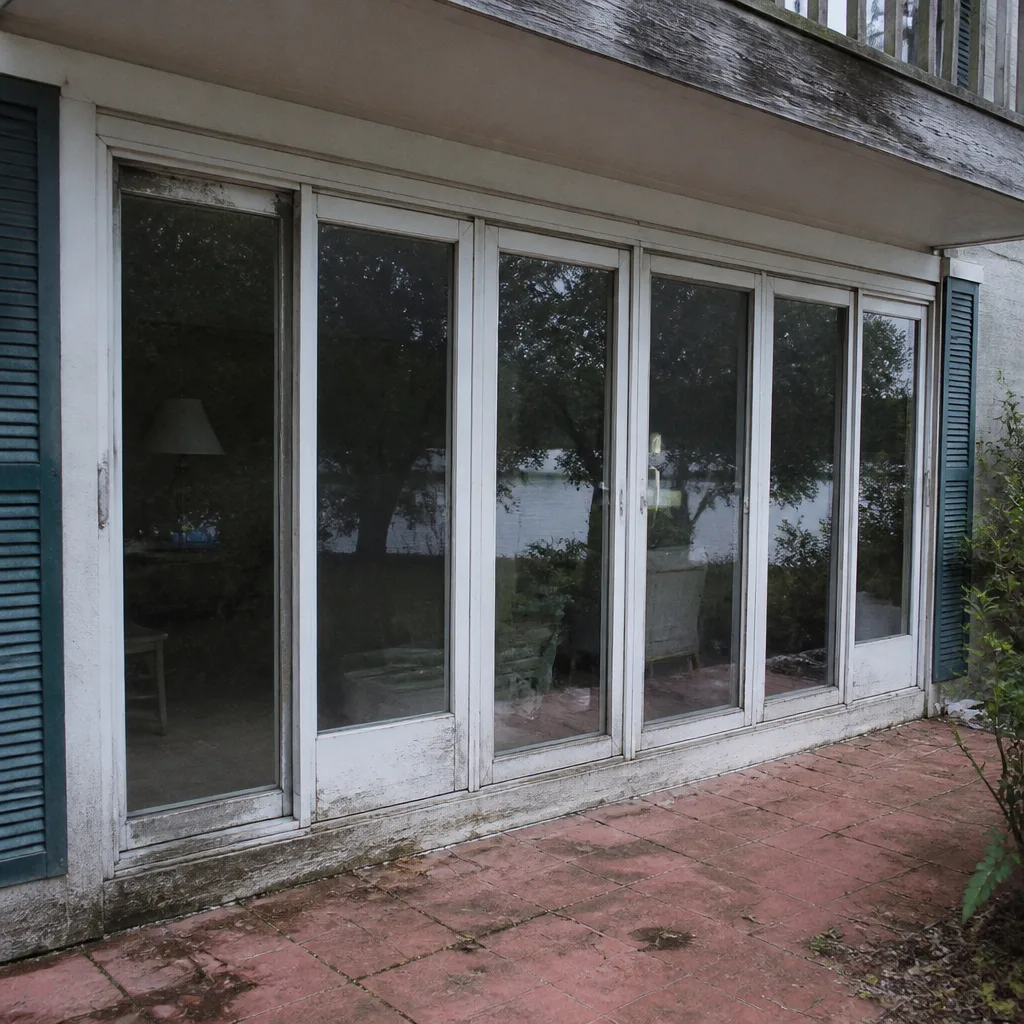 Before
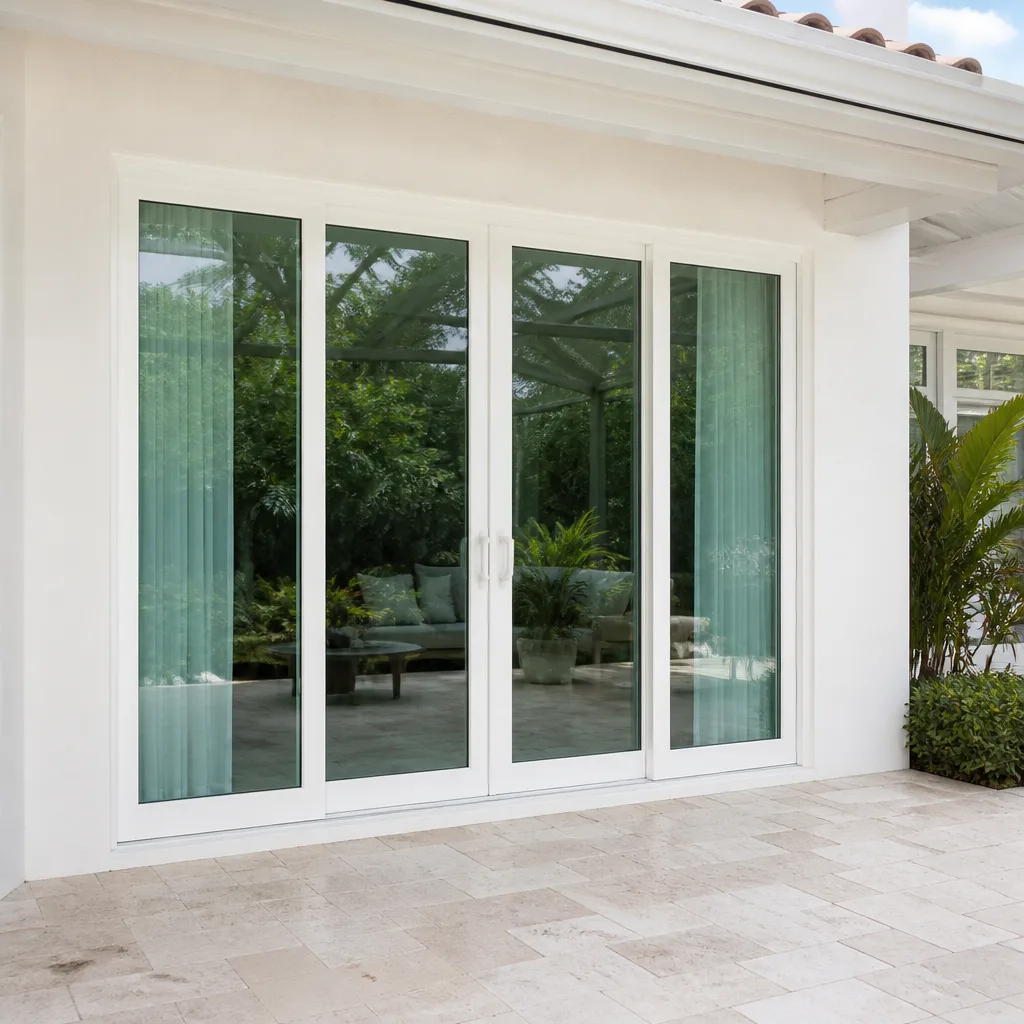 After
After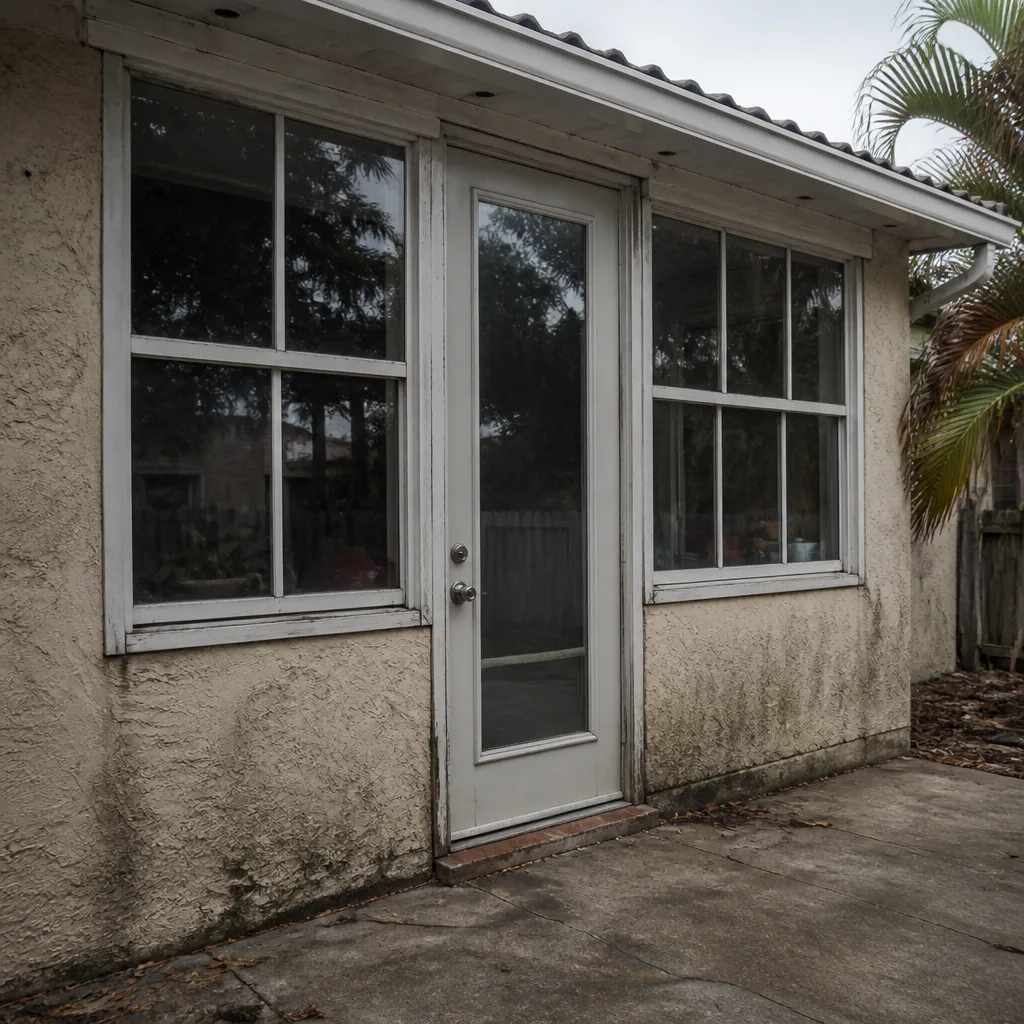 Before
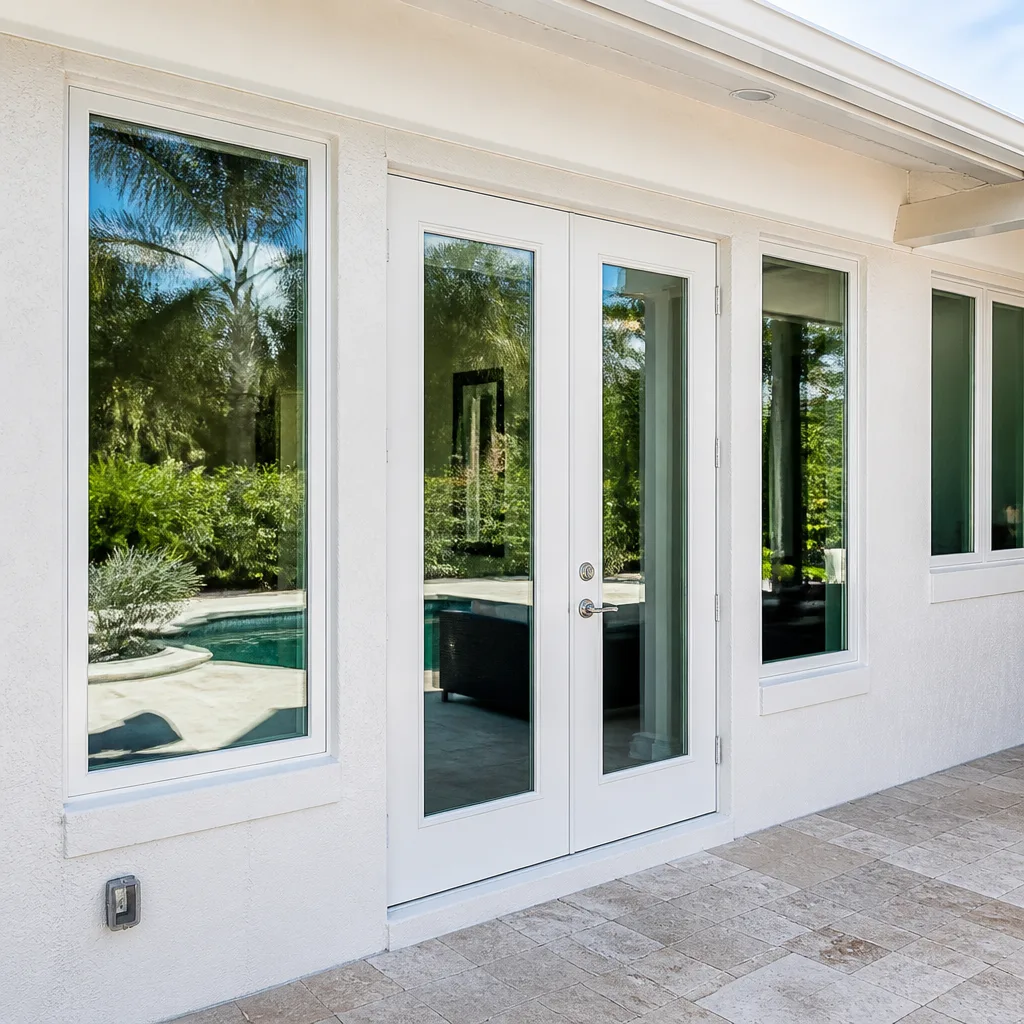 After
AfterWindows & Doors Warning Signs: A Sarasota Homeowner’s Reference Guide
A fogged or milky double-pane window in Sarasota isn’t just an aesthetic problem. It means the argon fill that provides roughly 15 to 20 percent of the unit’s insulating value has already escaped, and in a coastal UV environment the glass degradation that follows typically accelerates faster than in inland climates. This guide walks through the warning signs that appear before a window or door fails outright, so you can catch problems when they’re still inexpensive to fix. For a deeper dive into your options, see DIY vs Professional Windows & Doors: The Sarasota Homeowner’s Decision Guide. By the time the pane clouds, the frame bows, or the lock sticks, the failure is already underway. You’ll learn to read the early signals and know which ones demand a call to a professional.
Quick Answer
The most common early warning signs for Sarasota windows and doors are condensation between panes, visible frame deformation or hairline cracking, sticky multi-point locks with visible white oxidation, daylight visible around a closed door, and bubbling paint or soft drywall near openings. Any one of these means the window or door has begun losing its hurricane protection and energy performance. A professional assessment will tell you whether a repair is possible or replacement is the better investment.
Table of Contents
- Fogged and Milky Panes: When Argon Fill Escapes
- Aluminum Frame Cracks: Seasonal Expansion vs. Structural Stress
- Corrosion on Multi-Point Hardware: The Salt-Air Timeline
- Daylight Around a Closed Door: What It Actually Means
- Sill Pan and Flashing Failures: Interior Signs That Arrive First
- Impact Window Interlayers: Reading Damage After a Strike
- Energy Bills and Drafts: Two Signals Homeowners Ignore
- Common Mistakes to Avoid
- When to Call a Professional
- Frequently Asked Questions
- The Bottom Line
Fogged and Milky Panes: When Argon Fill Escapes
A double-pane insulated glass unit, or IGU, is a sealed sandwich of two pieces of glass with an airspace between them, typically filled with argon or krypton gas. The gas is denser than regular air, which slows heat transfer through the window. In a Sarasota summer, that gas layer is doing measurable work. When the seal around the IGU fails, which it eventually does on every sealed unit ever made, the argon leaks out and gets replaced by ordinary humid Florida air. That’s when you see the telltale fog: moisture condensing on the inside of the glass where you can’t wipe it away.
Here’s what to watch for, in the order it usually appears:
- Intermittent condensation that appears in the morning and burns off by noon. This is the earliest stage. The seal is compromised but the failure is small. Some homeowners in Sarasota mistake this for exterior dew and ignore it for years.
- Persistent haze that never fully clears. At this point enough moisture has entered the unit that the silica desiccant inside the spacer bar is saturated. The desiccant is a drying agent designed to absorb residual moisture from manufacturing. Once it’s full, water vapor stays in the airspace permanently.
- A permanent white or gray film inside the glass. This is mineral residue left behind as condensation repeatedly evaporates and re-condenses. It doesn’t clean off because it’s on the inside surfaces of the IGU, not the room-facing side.
- Visible distortion or streaks running down the interior glass surface. The inner surfaces of the two panes now have mineral deposits that scatter light. Energy performance is significantly reduced by this stage.
We see fogged IGUs throughout Sarasota, from Siesta Key condos to homes in Palmer Ranch. The coastal humidity accelerates the process compared to inland Florida. Here’s the thing most window replacement literature doesn’t explain: once the argon is gone, that IGU has lost a meaningful fraction of its insulating value permanently. It also means the window can no longer earn whatever energy rating was printed on its original label. For homeowners considering whether to repair or replace, we walk through the math honestly. On an older window with marginal frames, replacement often costs less long-term than chasing IGU replacements every few years. Our Window Replacement in Sarasota page covers that calculation in detail.
Aluminum Frame Cracks: Seasonal Expansion vs. Structural Stress
Aluminum is a great frame material for coastal Florida because it doesn’t rot. But it does move. Aluminum expands and contracts with temperature changes far more than wood or vinyl. In Sarasota’s climate, where a summer afternoon can be 95 degrees and a January night can drop into the 40s, that thermal movement is constant. A hairline crack at an aluminum frame corner might be harmless thermal stress. Or it might be the first visible sign that the window’s structural integrity is compromised. Here’s how to tell.
Cracks that are likely cosmetic:
- Uniform, hairline-thin, and running along a weld seam or screw hole in the frame corner
- Present on multiple windows with no related glass or operational problems
- No change in how the sash sits in the frame; windows open and close normally
- No water staining on interior drywall or trim below the window
Cracks that signal structural compromise:
- A crack that has widened over time, or one that you can feel catch a fingernail across
- Discolored white oxide powder, also called exfoliation, forming along the crack line
- The sash no longer sits square in the frame; you see a slight sag or the window binds when you operate it
- The crack runs all the way through the frame profile, not just along a weld bead
- Only one window in the room exhibits the crack while identical windows elsewhere do not
Why this matters in Sarasota specifically: impact-rated windows and doors are tested and rated for wind load based on the assumption that the frame is intact and able to transfer load to the structure. A frame that has begun to crack at a corner or sag under its own weight is a frame that can no longer deliver the rated performance. If a named storm arrives, that window is the weak point. The same logic applies to any window, impact or not. A structural crack means water and air are finding their way through the frame barrier, even if you can’t see the gap. Our Impact Windows in Sarasota guide covers the rating question in depth.
Corrosion on Multi-Point Hardware: The Salt-Air Timeline
Multi-point locking hardware on entry doors and French doors is exposed to more salt air in Sarasota than homeowners realize. The Gulf breeze carries salt. When it lands on zinc-plated or nickel-plated hardware, it begins a slow chemical reaction. The first visible sign is usually a fine white or gray powder on the lock’s faceplate or latch points. That’s zinc oxide, not rust, and at this stage the hardware is often cleanable.
Here’s the progression we’ve observed on doors within a few miles of the coast in Sarasota:
- Early stage (years 1 to 3 after install): Dull finish on handle hardware, slight stiffness in the lock, and faint white powder. Cleaning with a mild detergent and a dry silicone lubricant usually restores smooth operation. No replacement needed.
- Mid stage (years 3 to 7): Visible pitting on chrome surfaces, a lock that requires more force to throw the deadbolt or engage the multi-point bolts, and audible grinding when the handle is turned. At this point, disassembly, cleaning, and re-lubrication may help, but the plating is compromised and corrosion will return.
- Advanced stage (years 7 and beyond): The lock cylinder turns stiffly or sticks entirely, latch bolts no longer align with the strike plate because the hardware has shifted, and you see rust-colored staining around screw heads. Replacement is the correct call, not repair.
One warning sign homeowners here frequently misinterpret: a key that works perfectly in the deadbolt but binds in the multi-point lock. They assume the key is the problem. It’s almost never the key. The multi-point mechanism has multiple moving parts, and salt corrosion attacks the smaller, tighter-tolerance components first. By the time a key binds, the mechanism is already past the cleaning stage. We install doors and hardware that are selected for coastal exposure, and a big part of that is choosing hardware with proper marine-grade finishes from the start.
Daylight Around a Closed Door: What It Actually Means
Stand inside your home with the door closed and the lights off during daylight. Look at the perimeter of the door. If you can see daylight through any gap, two things are happening, and the order in which they cause problems matters.
First, the failing weatherstrip or misaligned door is allowing wind-driven rain to reach the threshold. In Sarasota, afternoon thunderstorms can deliver horizontal rain with 30 to 40 mile-per-hour gusts. A visible gap around a door is an open invitation for water to collect where the threshold meets the interior flooring. The water damage arrives faster than the energy loss, and it’s more expensive. Warped hardwood, lifted tile, subfloor rot, and ultimately mold are the real costs of daylight around a door, not the monthly air conditioning bill.
The energy loss is real, though. Even a 1/8-inch gap along the bottom of a standard 36-inch entry door adds up to a hole roughly the size of a golf ball. In August, when attic temperatures in Sarasota hit 130 degrees, every cubic foot of unconditioned air that leaks in adds load to the HVAC system. But the energy cost is gradual. The water damage from a single Florida storm season can run into thousands of dollars.
Here’s a simple field test:
- Close the door and lock it. Slide a dollar bill between the door and the weatherstrip at several points around the perimeter. If the bill pulls out easily with no resistance, the weatherstrip is not sealing.
- Look at the gap between the door slab and the frame. It should be consistent all the way around. A door that is tight at the top but gapped at the bottom indicates settled hinges or a worn hinge screw.
- Check the threshold height. On most exterior doors, the threshold has an adjustable cap. If the cap is worn, compressed, or missing its vinyl seal, water is pooling on the threshold during every rain event.
- Test the door’s sweep. If you can feel air moving across the top of your foot while standing inside, the sweep is worn and needs replacement.
This is one of the most common repairs we perform in Sarasota, and it’s frequently on doors that are otherwise in good shape. A proper fix usually involves adjusting the hinges, replacing the sweep and weatherstrip, and sometimes re-hanging the door. It’s a repair that pays for itself in a season.
Sill Pan and Flashing Failures: Interior Signs That Arrive First
The most misunderstood water damage in Sarasota homes shows up as something that looks like a plumbing problem. Here’s a scenario we see repeatedly: a homeowner notices bubbling paint or soft drywall below a window on an interior wall, calls a plumber, and learns there’s no pipe anywhere near the area. The water is coming from the window opening, not from inside the wall.
Window and door openings need a sill pan, which is a waterproof barrier installed under the threshold or window before the unit is set. They also need flashing, which directs water that gets past the exterior finish back out of the wall. When a sill pan is missing, improperly installed, or compromised, water enters the wall cavity and follows gravity to the first horizontal surface it meets, usually the bottom plate of the wall. From there it wicks into the drywall.
Interior warning signs that indicate sill pan or flashing failure, in order of appearance:
- Bubbling or peeling paint in a vertical line below a window or door. This is water staining forcing its way through the drywall from behind. The paint fails before the drywall softens.
- A soft spot in the drywall directly beneath the corner of a window or beside a door jamb. Press gently with your thumb. If it flexes or feels spongy, the drywall core is wet.
- Musty odor that appears only after rain. The wall cavity is getting wet during storms and drying slowly between them. In Sarasota’s humidity, drying can take weeks and mold growth starts within days.
- Visible staining or mineral rings on baseboards beneath an opening. The water is wicking upward from the bottom plate into the baseboard material.
- Caulk that has separated or cracked on the interior around the window or door. This is often a symptom rather than a cause. The opening is moving because the framing behind it is swelling from moisture.
By the time these signs appear, the flashing or sill pan failure has been underway for months, possibly years. In homes built before Florida’s building codes began requiring proper sill pan flashing, a missing sill pan is more common than homeowners want to hear. When we perform Window Installation in Sarasota, one of the first things we do is verify that the existing opening has correct pan and flashing details. If it doesn’t, the new window will leak regardless of how good the window itself is.
Impact Window Interlayers: Reading Damage After a Strike
Impact windows are built differently than standard glass. They use two pieces of glass bonded to a polymer interlayer, usually a polyvinyl butyral or ionoplast film. When debris strikes an impact window during a storm, the glass may crack, but the interlayer holds the broken pieces in place. That’s the design working as intended. The window keeps its barrier function even with shattered glass.
What homeowners often don’t realize is that an impact window can absorb a strike and lose its rated integrity without the glass cracking. The interlayer itself can be damaged in ways that aren’t visible from the outside. Here’s what to look for after any impact event, whether it’s a flying branch during a thunderstorm or a baseball from the neighbor’s kid:
- Tears or punctures in the interlayer visible as a white or frosted line inside the glass unit. Hold a flashlight against the glass at night and look through the pane. Damage to the interlayer often appears as a bright line or halo that doesn’t match any crack on the outside surface.
- Delamination, where the interlayer separates from one of the glass panes. This appears as a cloudy or silver-colored area that spreads from a corner or an impact point. It often looks like an air pocket trapped inside the glass.
- Haze that appears weeks or months after a storm, not immediately after. A compromised interlayer can slowly absorb moisture from the air, which causes a progressive loss of clarity. It starts faint and gets worse.
- A visible crack that does not extend across the glass. In a standard annealed glass window, a crack runs. In an impact window, a small crack may stop at the interlayer and stay localized. That’s normal. But it means the window took a hit, and the interlayer absorbed force. It should be evaluated.
The key point: once an impact window’s interlayer is compromised, that window no longer carries its rating. It might still be in the frame and the glass might look intact. But in the next storm, it offers less protection than the manufacturer designed it for. Many Sarasota homeowners have impact windows installed by the builder and have never had them inspected. If your home took a direct hit from debris, schedule an inspection. A window that “looks fine from the outside” is not an inspection.
Energy Bills and Drafts: Two Signals Homeowners Ignore
Your windows and doors are telling you something every month, and most people never read the message. It’s in the electric bill. Compare your summer kilowatt-hour usage year over year, not month to month. A home that used 1,800 kWh in August two years ago and 2,200 kWh this August, with the same thermostat settings and the same number of occupants, has a problem. Windows and doors are the biggest variable in the building envelope after the attic.
Sarasota has one of the highest cooling loads in the continental United States. HVAC systems here run 250 to 300 days a year. A single failed window IGU or a door with degraded weatherstrip might not move the needle noticeably on its own. Ten windows with failed seals, worn sweeps on two exterior doors, and a sliding glass door with a compromised track will absolutely show up on the bill.
The second ignored signal is the draft test. On a windy afternoon, walk your interior perimeter slowly with a damp hand. You’re feeling for any air movement, not cold air specifically. In summer, even warm air moving across damp skin feels noticeably different. Mark every location where you feel a draft. Then test those locations again on a calm day. If the draft persists, it’s pressure-driven, not wind-driven, meaning your home’s air barrier has a leak at that point.
Every one of those leaks is a path for air to move through your window or door assembly. The fix might be as simple as new weatherstrip. It might be an IGU replacement. It might require a full window replacement if the frames have reached the end of their service life. The point is always the same: the signal is there, it’s measurable, and it’s costing you money every day you wait.
Common Mistakes to Avoid
- Caulking the weep holes in a window or door frame. Weep holes are the small openings at the bottom of exterior frames that let water drain out. Homeowners see them, assume they’re a flaw, and fill them with caulk. The window now traps water inside the frame and drains it into the wall.
- Using WD-40 on door and window hardware. WD-40 is not a lubricant in the traditional sense. It’s a water displacer. It cleans and temporarily frees up sticky mechanisms, then dries into a film that attracts dust and salt. Use a dry silicone or Teflon-based lubricant instead.
- Replacing an IGU in a frame that’s already failing. It feels cheaper than full replacement. But if the frame is cracked, corroded, or warped, a new IGU in that frame is a band-aid that will fail early. You’ve spent 40 percent of the cost of a new window to defer the inevitable by a few years.
- Ignoring a sticky lock because “it still works.” A multi-point lock that requires force is a lock on its way to failure. In a hurricane event, you want that door fully engaged. A lock that won’t throw all its points leaves the door vulnerable to wind pressure at exactly the wrong moment.
- Waiting for visible water damage before investigating flashing. By the time drywall softens or baseboards stain, water has been entering the wall for months and the repair includes drywall repair, insulation replacement, and possibly mold remediation. Interior signs are the late signal, not the early one.
- Replacing only the door slab and leaving old hardware and weatherstrip. The slab gets blamed for problems usually caused by the frame, the threshold, or the hardware. If you’re replacing the door because of air leaks or water intrusion, replace the complete assembly or address every related component at the same time.
When to Call a Professional
Some of what’s in this guide you can assess yourself: daylight around a door, a draft that you can feel with a damp hand, white powder on lock hardware. Other signs demand a trained eye. If you see a crack in an aluminum frame that has widened, a fogged IGU on a window that’s less than ten years old, interior drywall staining below any opening, or any sign that an impact window took a strike, call for a professional assessment before the next storm season. The specific fixes vary by manufacturer, frame material, and the age of the installation. Winslow Windows & Doors offers free estimates in Sarasota. Call (941) 267-0779 and Ed or one of our technicians will walk the property with you and tell you what we’re seeing, whether you hire us or not.
Frequently Asked Questions
Replacing a single IGU in Sarasota typically runs between $200 and $500 depending on size and glass type, while replacing the entire window with a new frame runs $600 to $1,400 per opening for standard sizes. Impact-rated units run higher. The right choice comes down to the condition of the frame and the age of the window. Call (941) 267-0779 for an exact quote on your specific window.
Yes, weatherstrip replacement is a standard repair that usually costs $15 to $40 in materials and takes under an hour. If the door is otherwise sound, aligned, and operating smoothly, this fixes most air leaks and water intrusion at the perimeter. If the door slab or frame is warped or the threshold is shot, weatherstrip alone won’t be enough.
Homes built after Florida’s 2002 building code revisions in the high-velocity hurricane zone require impact-rated or otherwise protected openings. Older homes may be grandfathered, but any replacement window in a wind-borne debris region must meet current code. If you’re not sure whether your home is in the wind-borne debris region for Sarasota County, call (941) 267-0779 and we’ll verify it on your specific property.
A cosmetic crack is hairline-thin, doesn’t widen over time, doesn’t show white oxide powder, and doesn’t affect how the window operates. A structural crack has widened since you first noticed it, catches a fingernail, shows corrosion residue, or is accompanied by a sash that no longer sits square. Structural cracks compromise the window’s wind-load rating and need professional evaluation.
Yes, repairing failed IGUs, replacing worn weatherstrip, and sealing air leaks around window and door frames lowers cooling costs measurably. The actual dollar savings vary with the size of the home and the number of problem openings. Homes with ten or more compromised openings often see a 10 to 15 percent reduction in summer cooling costs after repairs.
Yes, when a permit is required for a window or door replacement, we handle the permit application and schedule the required inspections. Sarasota County and the City of Sarasota both require permits for most replacement work. A properly permitted job means the work is inspected and meets current Florida Building Code standards.
The Bottom Line
Windows and doors in Sarasota don’t fail without warning. They send signals for months or years before the failure becomes visible to the average person: a fogged pane means a lost argon fill, a hairline frame crack means compromised wind-load capacity, a sticky multi-point lock means salt corrosion has entered the mechanism, and bubbling drywall below a window means water has been entering the wall for a long time. Most of these signals are detectable in a ten-minute walk around your home. The question is whether you read them early, when a repair costs hundreds, or late, when a replacement and its associated damage costs thousands. Ed Winslow founded Winslow Windows & Doors home to answer that question honestly for his neighbors, and that’s still how we operate.
Written by Ed Winslow, Owner at Winslow Windows & Doors, serving Sarasota since 2011. Browse more guides & resources on windows and doors.
Six Reasons Homeowners Choose Winslow Windows & Doors
Impact systems engineered to design pressures up to +/-100, matched to your wind zone - your openings hold when the storm arrives.
Low-E insulated impact glass from our manufacturer lines commonly cuts monthly cooling bills 20-30%.
Laminated impact glass shuts out up to 40% of outside noise - traffic, neighbors, weather.
Monitoring services run $30-90 a month. Laminated impact glass resists forced entry around the clock, with no subscription.
Florida homeowners average around 25% savings on the windstorm portion of their policy after protecting every opening - some homes qualify for more.
A full impact package upgrades curb appeal, buyer confidence and appraised value in one project.